
BMW 3 Series (G20/G21) Upgrade Guide: Carbon, Exhaust and Intake for the 330i and M340i
A carbon fiber, exhaust and intake guide for the BMW 3 Series G20 and G21. What each part does on a 330i or M340i, and the order we would fit them.

The G20 and G21 have been the default sports sedan for a few years now. Good from the factory does not mean finished, though, and the 330i and M340i in particular leave a fair amount on the table.
This guide is about getting a proper M-car feel into a non-M 3 Series without going the whole way: carbon fiber first, then exhaust, then intake, in the order we would fit them ourselves.
Why the 3 Series takes upgrades so well
The G20 sedan and the G21 Touring are built on the classic BMW recipe: long hood, cabin pushed back over the rear axle, rear-drive-based chassis. That is what makes the car so adaptable: quiet commuter during the week, sharp back-road car at the weekend, same car.
Most owners have one of two engines. The 330i runs the 2.0-liter single-turbo B48 four-cylinder; the M340i runs the 3.0-liter single-turbo B58 straight-six, a close relative of the engine in the M3. Both are turbocharged, which matters here: a turbo engine responds clearly to changes in how it breathes in and out. And because a non-M 3 Series looks fairly plain in standard trim, the right parts change its character more than they would on a car that already shouts.
Carbon fiber is the biggest visual step
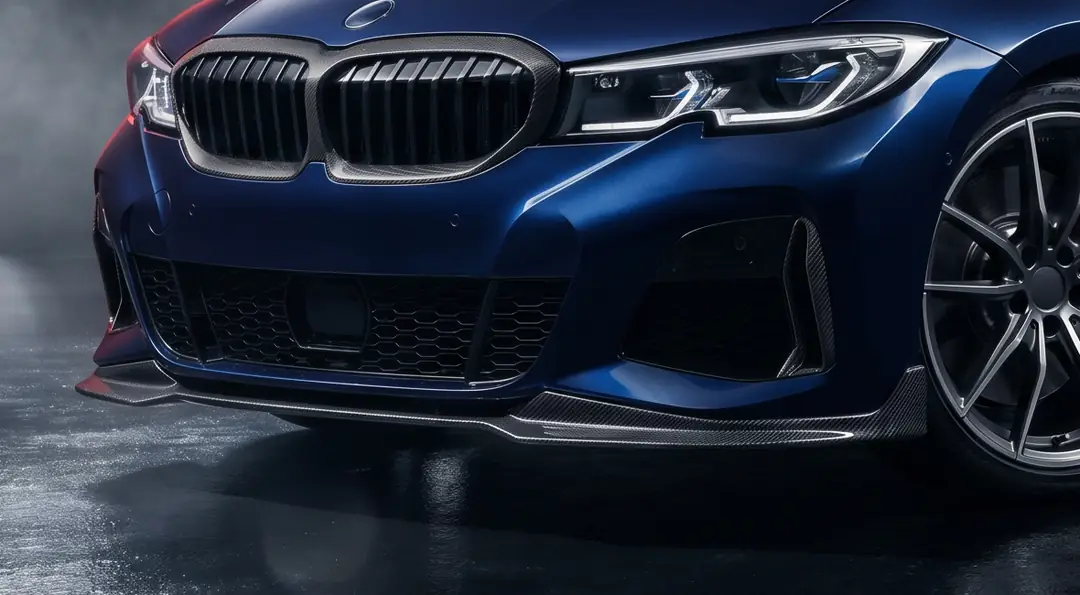
If you want the M look without the full M car, carbon fiber is where to start. The parts that do most of the work are the usual ones: a front lip or splitter, kidney grille surrounds, mirror caps, a ducktail trunk spoiler, a rear diffuser and side skirts. On a car with the M Sport bumpers, they make the nose and tail look far more serious.
There is a practical side to it too. Carbon is stiff for its weight, so a splitter or a diffuser stays light without flexing. The parts we sell are made from prepreg dry carbon fiber, so the resin content is controlled rather than brushed in by hand, and they are made to OEM dimensions so they go on in place of the original panel without cutting or forcing. On a dark car, a deep twill weave next to gloss black trim looks like something BMW could have offered as a special edition.
Exhaust: what to expect on a 330i versus an M340i
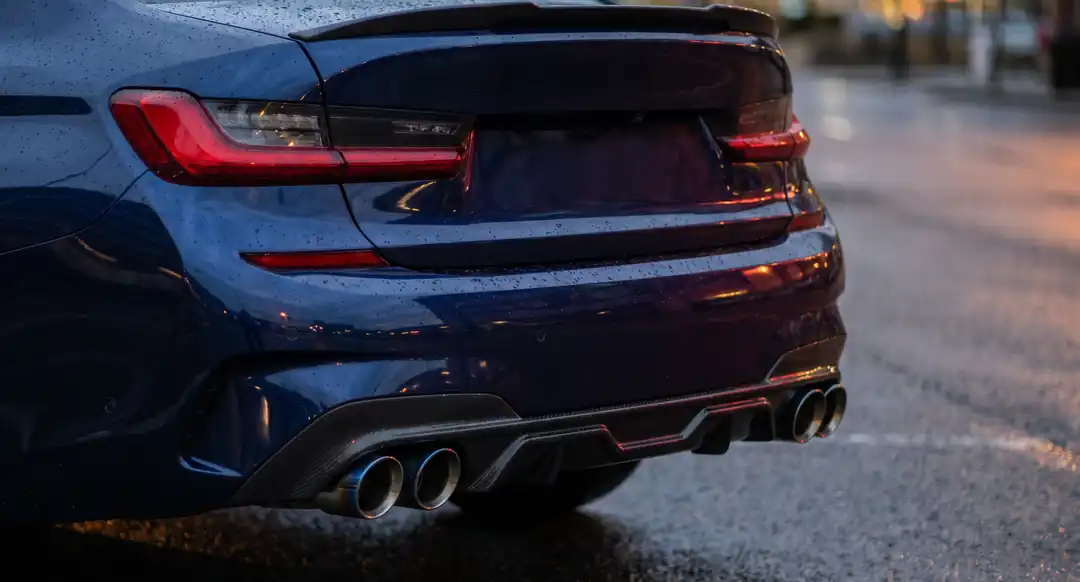
On a 3 Series the exhaust is usually the change owners enjoy most, but the result depends on which engine you have. The B58 in the M340i already has a rich six-cylinder tone; a cat-back, which replaces the system from the catalytic converter back, brings that tone out and cleans it up. The B48 in the 330i is a different animal. A cat-back makes it fuller and sportier and takes away some of the muffling the factory system builds in, but a four-cylinder will not sound like a six, and we would rather say so up front.
For either engine, a valved system is the most livable option. Valves closed, it is quiet enough for the school run. Valves open, it is loud when you want it. If you want to go further, a downpipe lets the turbo exhale with less restriction, and it does its best work paired with a matching software calibration. Titanium is the other option worth knowing about: it is lighter than stainless steel and gives a brighter, more metallic note.
Intake: cooler, cleaner air for a turbo engine
Both the B48 and the B58 are turbocharged, and a turbo does its job better when the air it pulls in is cool and arrives without obstruction. A performance intake kit does away with the restrictions of the standard airbox. A sealed carbon airbox goes a step further by walling the filter off from engine bay heat, which reduces heat soak in traffic or after a hard run.
What you notice is throttle response and how the turbo picks up boost. Many kits also let more of the induction noise and the blow-off sound into the cabin, and some owners buy the intake for that alone.
Which order to fit them
Nobody has to do all of this in one go. The order below spreads the cost, and every step gives you something you can see or hear:
- Looks first: carbon front lip, mirror caps and kidney grille surrounds. The most visible change for the money, and it suits either engine.
- Sound second: a cat-back, ideally valved. The most satisfying step, especially on the M340i.
- Breathing third: a performance intake or sealed carbon airbox, for throttle response and induction noise.
- Flow last: a downpipe, once you are ready for a tune to go with it.
One thing to keep in mind throughout: pick parts that share the same weave, the same quality and the same fit standard. Mix them and the car starts to look like an accessories catalog rather than something that left the factory this way.
Parts for the G20 and G21 at BYC
BYC Performance stocks carbon fiber body parts, cat-back and downpipe exhaust systems and intake kits for the BMW 3 Series G20 and G21, sourced from specialist manufacturers around the world. Every part carries a 24-month BYC warranty and ships free via partner couriers across Türkiye and worldwide, with customs and duties covered (DDP).
Whether you drive a 330i or an M340i, you can browse the catalog, message us on WhatsApp to check fitment and delivery, or see finished cars on Instagram at @bycperformance.