

When drivers first head down the carbon-fibre path, most begin with mirror caps or small trim. Yet the single part that changes a car's character most is far bigger: the hood.
A carbon hood delivers three things at once — it sheds weight from the very front of the car, helps vent engine-bay heat when it's designed to, and rewrites the car's face. Here's why it's so effective, and what actually makes a good one 👇
🏁 The biggest surface, the highest impact
The hood is the single largest body panel on a car, and it sits right at eye level, on the car's nose. That's exactly why switching it to carbon makes the biggest difference in one move — for both weight and looks. Small touches like mirror caps or a grille finish the details; the hood changes the whole stance.
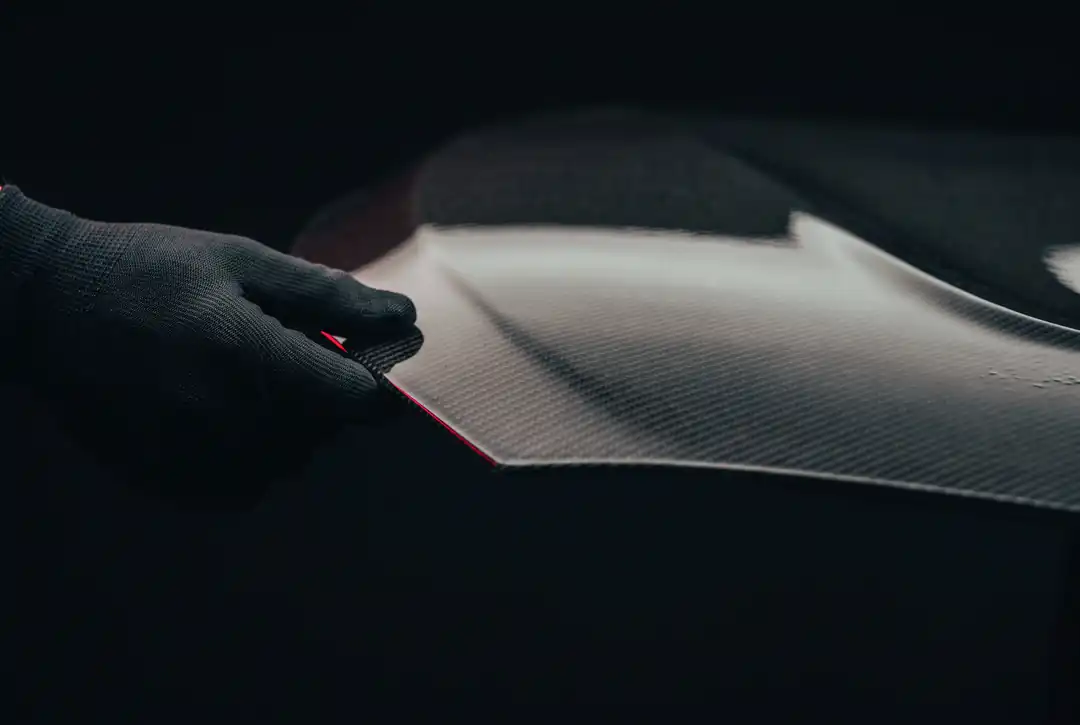
Factory hoods are usually steel or aluminium — solid, but heavy. Remaking the same shape in premium carbon fibre drops the panel's weight noticeably while bringing out that unmistakable weave.
⚖️ Weight off the nose: the difference you feel
Shedding weight anywhere is good — but where you shed it matters too. The hood sits at the very front of the car and relatively high up. Taking mass from here nudges the centre of gravity slightly lower and rearward, and lightens the load sitting over the front axle.
The result shows up less as a number on paper and more as a feeling: a lighter nose, a car that's keener to turn in and quicker to change direction. On a good road or on track especially, the front end feels carried with more grace — less like it's cast in lead.
🌡️ Heat and air: what a vented hood does
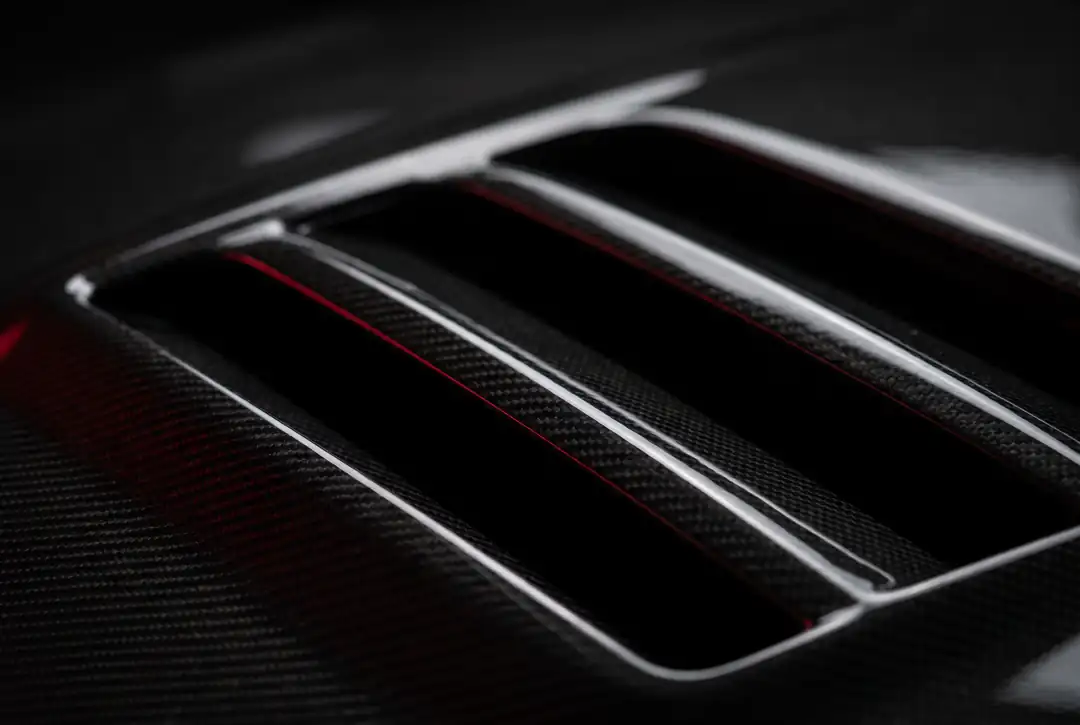
Most carbon hoods aren't just lighter — they're vented. Integrated louvers help the hot air trapped in the engine bay escape. On turbocharged engines and on track, managing under-bonnet heat is a genuine advantage for keeping performance consistent lap after lap.
Well-placed vents can also lower the air pressure building on top of the hood at speed, helping to trim front-end lift. Let's stay honest, though: how big these gains are depends on the design and how you drive — subtle on the street, far more noticeable on track. A smooth, closed-surface carbon hood is an option too; the choice comes down to your use.
👀 The single move that changes a car's face
Beyond function, a carbon hood is a pure style statement. Under a gloss or matte clear-coat, the twill weave adds depth and character at the most visible point on the car. Gloss shows off that “3D” weave in the light; matte gives a quieter, stealthier air.
Watch for two constructions here: single-sided hoods show the weave only on the visible top face (the underside is finished plain), while double-sided (full-carbon) hoods are wrapped in woven carbon underneath too — so it looks complete every time you pop the hood.
🔍 How to spot a good carbon hood
A carbon hood is the most conspicuous panel on the body, so a cheap build shows immediately. When choosing the right one, look for:
- OEM fit: Panel gaps, alignment with the bumper and fenders, and the latch/hinge points should match the original exactly. A poorly fitting hood looks cheap even if it's the most expensive part on the car.
- Weave alignment: The twill lines should run straight, symmetrical and unbroken across the panel — with no distortion around the nose or the vents.
- UV-stable clear-coat: The hood is the panel most exposed to the sun. Without a quality, UV-stable lacquer, carbon yellows and dulls over time.
- Structure and rigidity: Pre-preg construction and a proper cure keep the panel solid rather than fluttering at speed. Hood pins can add extra security if you want them — but an OEM-fit hood uses the factory latch without issue.
- Finish choice: Single- or double-sided, gloss or matte — decide up front, because it drives both the look and the price.
🛒 The right hood, the right stance
At BYC Performance we build carbon-fibre hoods — vented or smooth, single- or double-sided, gloss or matte — for the BMW M2, M3/M4, 3 Series and many more, to OEM-fit precision and with a UV-stable premium clear-coat. All of it is backed by a 12-month manufacturer warranty and free DDP shipping across Türkiye and worldwide (customs and duties are on us).
To choose the right hood for your car together, browse the catalog, message us on WhatsApp for fitment and delivery, or see our builds on Instagram at @bycperformance.