

If you own a turbocharged BMW, there may be a small part quietly waiting to strand you: the charge pipe. Usually moulded from plastic at the factory, it’s one of the best-known weak links in the turbo-BMW world — a component that grows brittle and cracks over time and under boost.
So what does this pipe actually do, why does it fail, and what does an aluminium upgrade buy you? Let’s walk through it 👇
🔧 What a charge pipe actually does
In a turbo engine, air makes two journeys. First the intake side draws outside air through the filter and into the turbo. The turbo compresses it — now it’s pressurised, or “charged” — and once the intercooler has cooled it, the charge pipe carries it on to the throttle body and intake manifold.
In other words, the charge pipe sits on the pressure side, delivering the boost your turbo makes to the engine. It usually also carries the diverter/blow-off valve mount and a boost (MAP) sensor port. Small, but critical: it’s the final bridge boost crosses to reach the engine.
⚠️ Why it cracks: plastic + heat + pressure
The root of the problem is the material. Many turbo BMWs leave the factory with a plastic (reinforced polymer) charge pipe. Constant heat-cycling and boost pressure make that plastic brittle over the years, until either the pipe body or the valve connection finally splits.
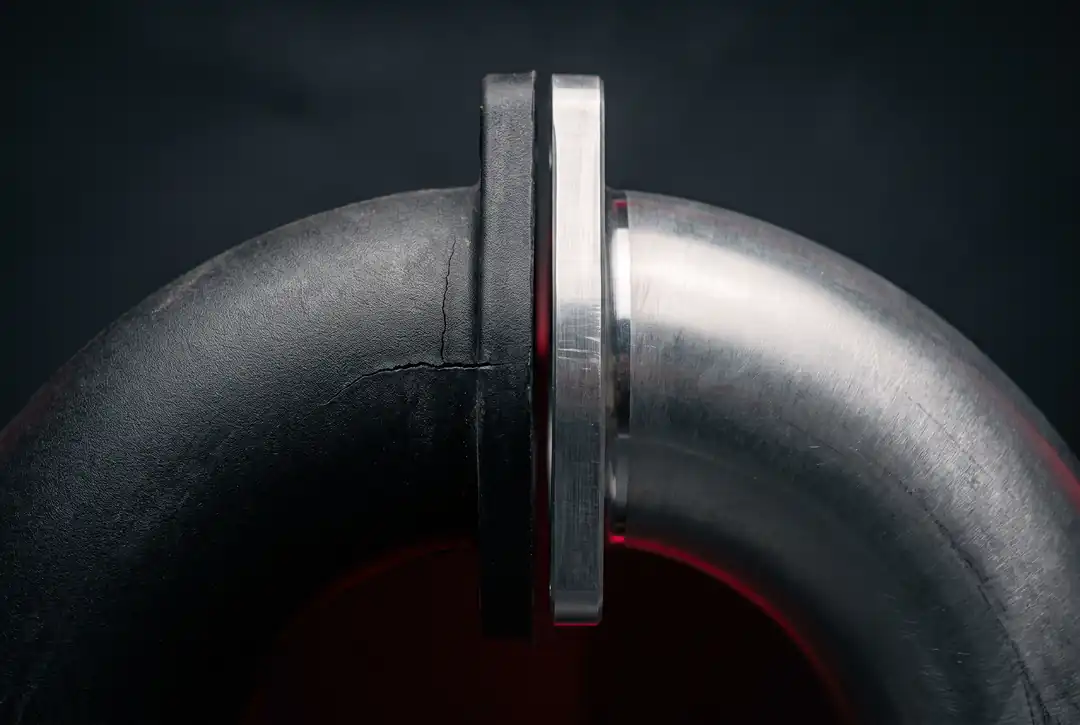
Once the car is tuned and running more boost, the risk climbs further — the plastic is pushed to pressures it was never designed for. When a crack appears, the symptoms are unmistakable:
- Sudden power loss and a drop into limp (“safe”) mode.
- A hissing or “pssh” under acceleration and a clear sense of a leak.
- A check-engine light with underboost fault codes.
- Misfires, rough idle or laggy throttle response.
🛠️ What an aluminium upgrade gives you
An aluminium (or reinforced) charge pipe steps in exactly where plastic is weakest — under heat and pressure. It won’t crack, it holds high boost safely, and it typically arrives with reinforced silicone couplers and stainless clamps that keep the joint sealed and permanent.
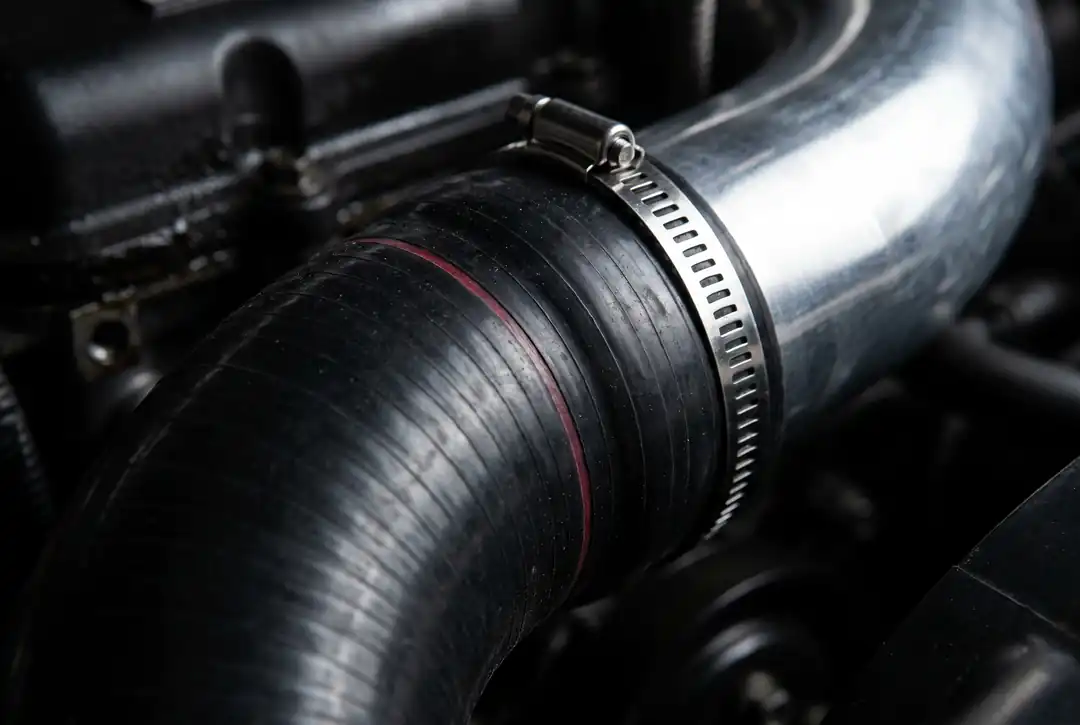
Let’s be honest, though: a charge pipe isn’t a power part on its own. Its job isn’t to add power but to hold boost without failing. Its real value is reliability — and if you’ve tuned your car, or plan to, it’s essentially insurance. Many aluminium pipes also let you fit an aftermarket blow-off valve, a nice bonus if you want that characteristic “pssh.”
🚗 Which BMWs is this for?
The plastic-charge-pipe story covers almost the entire modern turbo-BMW range: the N54, N55, S55, B58 and S58 families — everything from the 335i to the M2, M3 and M4, from the M340i to the latest M cars. Because each engine has its own pipe geometry and valve connection, the right part is model-specific; let’s pin down the exact fit for your car together.
🛒 Let’s choose the right charge pipe
At BYC Performance we supply intake and induction solutions — charge pipes included — for your turbo BMW, built to OEM-fit precision so every part seats on the factory mounting points without cutting or forcing. Everything comes with a 12-month manufacturer warranty and free DDP shipping across Türkiye and worldwide (customs and duties are on us).
To match the right charge pipe — and a complementary intake kit — to your engine (N54 / N55 / S55 / B58 / S58), browse the catalog, message us on WhatsApp for fitment and delivery, or see our builds on Instagram at @bycperformance.