

Carbon trims weight from the top, exhaust frees up the engine’s breathing — but the wheel is the one component that works under the suspension and while spinning at the same time. That’s why every gram here counts twice. And not every wheel is born the same way.
⚒️ Cast and forged: same wheel, two different worlds
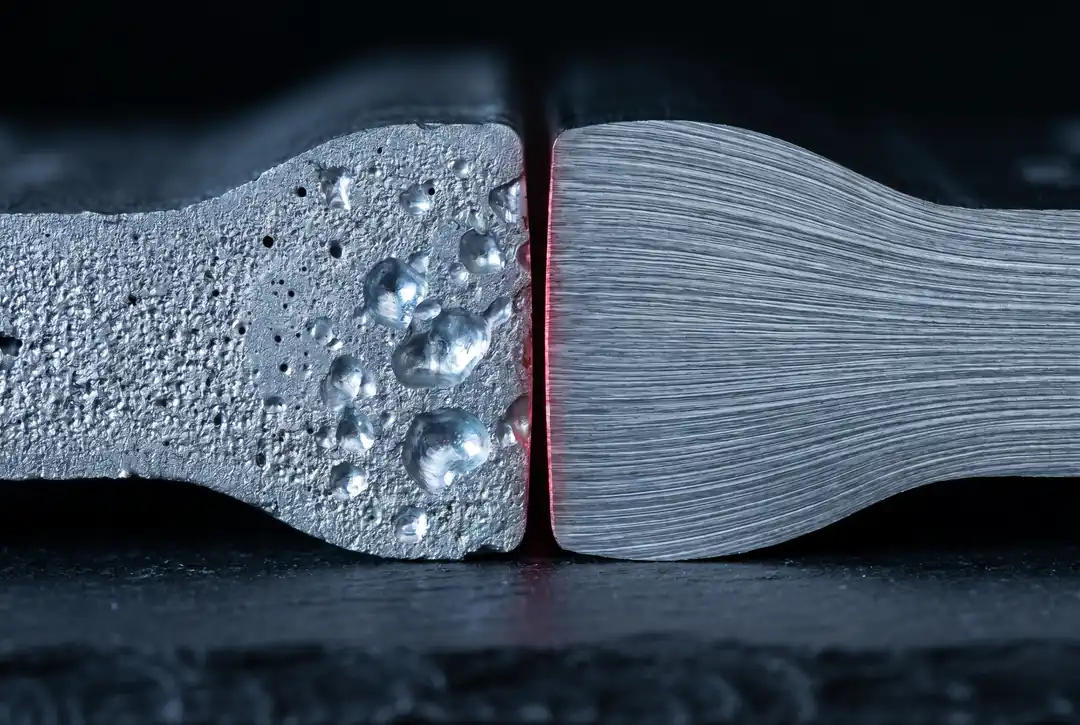
A wheel’s story begins before it ever takes shape — in how the metal itself is worked. In a cast wheel, molten alloy is poured into a mould or fed in under low pressure, then left to cool and solidify. The method is more economical and gives the designer wide freedom of form — but the metal’s internal structure (its grain) stays relatively loose and porous.
A forged wheel, by contrast, is born when a single solid block of metal (a billet) is pressed into form under thousands of tons of pressure. That immense force packs the metal’s grains together and aligns them along the direction of flow. The result is a material whose internal structure — invisible to the eye — is far denser and more orderly. In short: casting lets the metal flow into a mould; forging forces it into shape — and that difference changes everything.
💪 How can it be both lighter AND stronger?
At first glance this looks like a contradiction: how can one wheel be lighter and stronger at the same time? The answer lives in that aligned, compressed grain structure. A denser metal delivers more strength per unit of material.
That gives the designer a luxury: keep the strength you need while thinning the material and stripping out the excess. A cast wheel usually has to add thicker spokes and more material to reach the same durability. Forging does the opposite. So at equal strength a forged wheel can be noticeably lighter, or at equal weight meaningfully stronger.
🏎️ What you feel on the road: unsprung weight
This engineering difference turns into something you can actually feel. Wheel weight matters twice, because it carries two loads at once:
- Unsprung weight: The wheel sits below the spring, so it’s part of the mass the suspension is trying to control rather than the mass it already supports. A lighter wheel lets the suspension react faster to broken surfaces — the tyre stays truer to the road, and grip and comfort both improve.
- Rotational inertia: Speeding up and slowing a spinning mass takes more energy than moving a static one. A lighter wheel reduces that rotational inertia; the car responds more eagerly to throttle and brake, and the steering sharpens off-centre.
In practice, the car feels “lighter on its feet.” Turn-in is crisper, and under hard braking the wheel stays more composed — which gives the driver confidence. The first thing most people say after fitting a light forged wheel isn’t that the car is faster, but that it feels more alert.
🛡️ Durability and daily driving
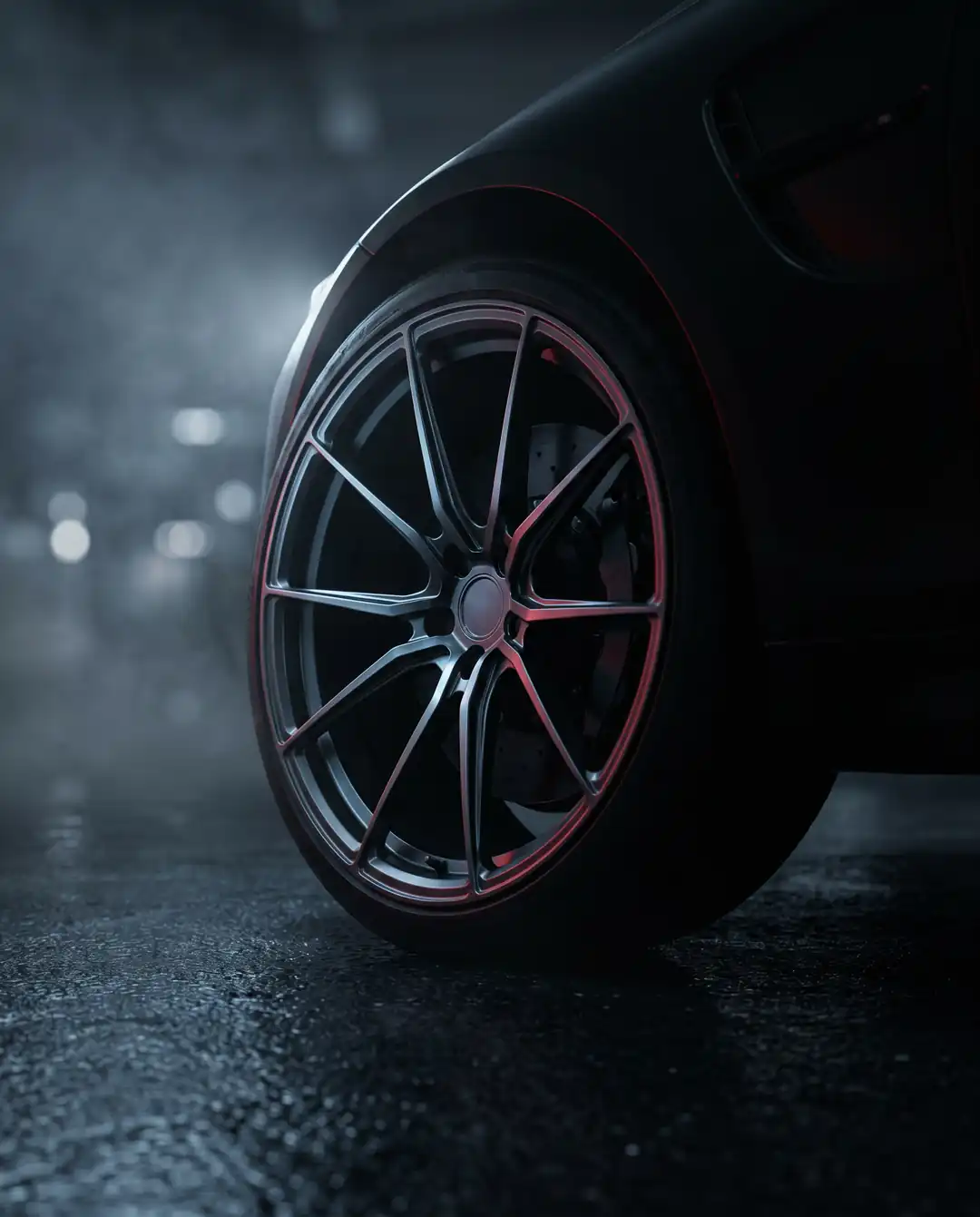
That compressed grain structure brings one more advantage: a forged wheel is generally more resistant to cracking and permanent deformation. Where a cast wheel can crack on a hard impact, a forged structure tends to absorb the hit better.
On Turkish roads in particular — sudden potholes, kerb strikes, broken asphalt — that translates into a visible qualitative durability advantage. We’re not claiming a forged wheel is unbreakable or that it shrugs off every pothole unscathed; but under equal conditions, a forged structure is usually more forgiving of damage. A premium set shows its worth in both the drive and the long haul.
🎯 Who is a forged wheel really for?
A forged wheel makes the most sense for the driver who puts the driving feel first: anyone who wants to sharpen cornering behaviour, heads out for track days, or simply wants the lightest premium set possible. But its real beauty shows not in isolation, but as part of the whole.
Think of a forged wheel as the foundational upgrade: big brake kits, suspension, and the carbon and exhaust work you’ve already done only reach their full potential when the wheel is light and strong. A light, open-design wheel helps the brakes manage heat, makes the suspension’s job simpler, and helps every independent part work better. That’s why a forged wheel is so often the first investment people make — and the upgrade that gives the most back.
🛒 The right wheel, the right investment
A good forged wheel reveals both your car’s stance and its character in the very first corner. At BYC Performance we build our forged wheel range to OEM-fit precision — backed by a 12-month manufacturer warranty and free DDP shipping across Türkiye and worldwide (customs and duties are on us).
To choose the right forged wheel set for your car, browse the catalog, message us on WhatsApp for fitment and delivery, or see our builds on Instagram at @bycperformance.