

Your exhaust lets the engine breathe out; your intake lets it breathe in. Most drivers start their performance journey with the exhaust — yet how much clean, cool air the engine takes in matters just as much.
💨 What an intake actually does
At its core, an internal-combustion engine is a pump that mixes air and fuel and burns it. The more — and cooler — the air going in, the more efficient that burn can be. Factory intakes are tuned for a balance of quietness, filtration, and cost; a performance intake kit shifts that balance toward flow: a less restrictive filter, smoother pipe transitions, and the coolest air it can find.
Think of it as the first link in the engine's “breathing” chain. The more freely the exhaust breathes out, the more freely the intake should breathe in — when the two work together, the engine genuinely opens up.
⚖️ Open cone filter or sealed carbon airbox?
There are two main approaches, and the right one depends on your car and how you drive it:
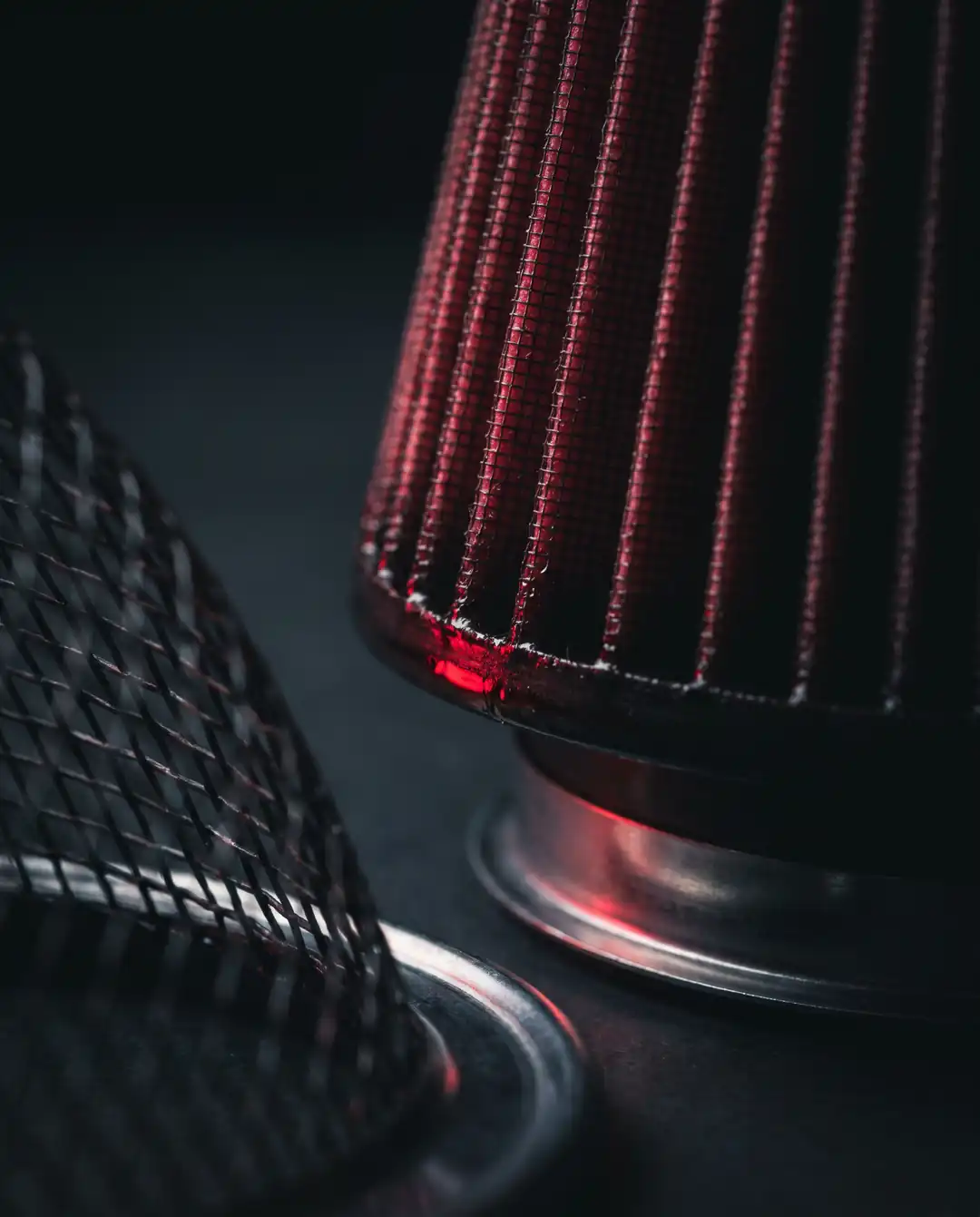
- Open cone filter (short-ram): The stock box comes out and a conical filter sits in the engine bay. It's the easiest to install and brings the induction sound most to the front. The one thing to watch is that the filter is exposed to under-bonnet heat.
- Sealed carbon airbox / cold-air intake: The filter is enclosed in a heat shield or carbon box, isolated from the engine's hot air and, where possible, fed cool air from the front grille. Cooler air is denser air — and denser air favours combustion.
If day-to-day consistency and cool intake air matter most, sealed/cold-air systems stand out. If you prioritise sound and a clean, “built” engine-bay look, an open cone filter is a satisfying choice.
🔊 Sound, throttle response, and realistic expectations
The most immediate effect of a performance intake is sound. Get on the throttle and you hear a deep, breathing induction note; on turbo engines especially, turbo and blow-off sounds become more present. The second effect is throttle response — a freer-flowing intake can sharpen how the car answers the pedal.
On power, it pays to be honest: on its own, an intake delivers a small but real improvement on most modern engines. The meaningful gains show up in a complete setup — where the intake works alongside the exhaust and a proper engine tune. The intake is one part of the airflow equation; done right, it's a part you'll notice.
🔍 What to look for in a quality kit
The quality of an intake lives in details you can see:
- Filter: Washable, re-oilable cotton-gauze filters deliver both flow and long life.
- Pipe: Smooth mandrel-bent aluminium or carbon pipes reduce turbulence and protect flow.
- Connections: Reinforced silicone couplers and stainless-steel clamps make a leak-free, durable joint.
- MAF / sensor position: Placing the mass-airflow sensor at the right diameter and the right point is critical so the engine reads the mixture correctly.
- Heat management: A carbon airbox or heat shield keeps hot engine air away from the filter.
There's a maintenance upside, too: stock paper filters get thrown away as they clog, while the washable filters in performance intakes are cleaned and re-oiled to last for years. Regular care protects flow and saves money over the long run.
🛒 The right intake, the right install
A good intake announces a car's character on the first throttle blip — and shows when you open the bonnet. At BYC Performance we build our carbon airbox and performance intake components to OEM-fit precision — backed by a 12-month manufacturer warranty and free DDP shipping across Türkiye and worldwide (we handle customs and fees).
Browse the right intake for your car in the catalog, message us on WhatsApp for fitment and delivery, or follow our builds on Instagram at @bycperformance.