
Titanium Exhaust Systems: Weight, Heat, Sound and Durability
How titanium compares with stainless steel for exhaust weight, heat, sound and longevity, and which cars already run it from the factory.
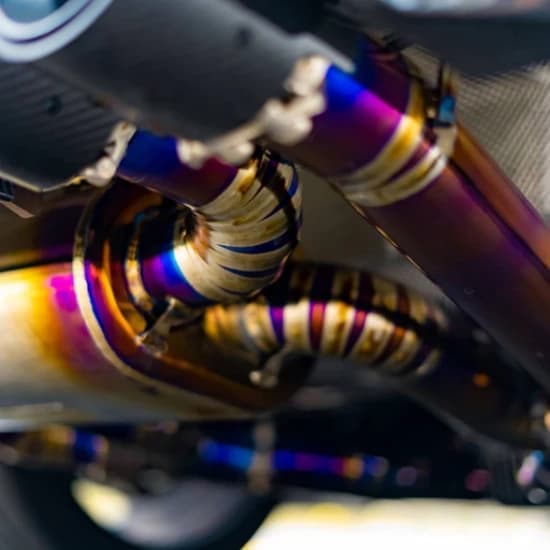
Exhaust choice on a performance car comes down to weight, heat and sound. Titanium does well on all three, which is why it has moved from race cars to street cars. Here is what the material really changes, and where the marketing gets ahead of the metal.
What a titanium exhaust is
The tubing, silencers and tips are made from a titanium alloy instead of mild steel or stainless. Titanium is roughly 40 percent lighter than steel for the same volume, it shrugs off road salt and moisture, and it copes with repeated heat cycles without rusting through. That is why race cars and supercars got it first, where every kilo costs money to remove.
What the material gives you in practice:
- Considerably less weight than a stainless system with the same layout
- Faster warm-up and cool-down, because thin, light tubing holds less heat
- A long service life with no rust to speak of
- A tone of its own, more on that below
You will not feel the weight on the way to work. You will see it on a set of corner scales, and in the power-to-weight figure.
What it does for performance
A titanium tube does not flow any better than a stainless tube of the same diameter. Where a titanium system helps the engine breathe is in the pipework design: larger, smoother runs and less restrictive silencers let exhaust gas leave with less effort, and on turbocharged engines that can free up some torque. How much depends on the car, the tune and what else is bolted on, so treat any single headline figure with suspicion.
The weight is the part you can count on. Take several kilos off the tail of the car and acceleration, braking and turn-in all get a little easier. Titanium also sheds heat faster than steel and holds its shape under hard heat cycling, so warped flanges and cracked welds are less of a worry on a car that sees track days.
Sound
Titanium tubing is thinner and lighter than the stainless it replaces, so it rings differently: a deep, rich note with a metallic edge that a heavy steel system tends to muffle. Refined or aggressive depends on the silencer design, and a good system gives you some of both.
Then there is the color. Titanium takes on blue and purple tints as heat oxidizes the surface. Nothing is painted. It is the metal itself reacting, and no two systems end up looking quite the same.
Looks and durability
That heat-tinted finish and the smooth surface are why titanium tips get photographed so often. Underneath, the material keeps going long after stainless has started to pit. It does not rust and it is not bothered by salted winter roads. If you plan to keep the car for years, that matters more than the weight.
Where you already see titanium
Titanium is no longer a race-only material. It now shows up as standard equipment or a factory option on cars like the BMW M range, the Nissan GT-R, a number of Porsche and Lamborghini models and the Supra.
BYC Performance imports titanium exhaust systems built by specialist manufacturers around the world for a range of these cars and ships them worldwide through the online store.
Who should buy one
If you want a louder car for one season and money is tight, a good stainless system does the job. If you keep your cars, drive them hard and notice weight, titanium is the better long-term buy. Have a look at the titanium systems in the BYC Performance store, or message us on WhatsApp with your chassis code and we will tell you what fits.