
Titanium vs Stainless Steel Exhausts: What the Extra Money Buys
Titanium or stainless steel for your exhaust? We compare weight, heat color, sound, corrosion resistance and price so you can pick the right material for how you drive.
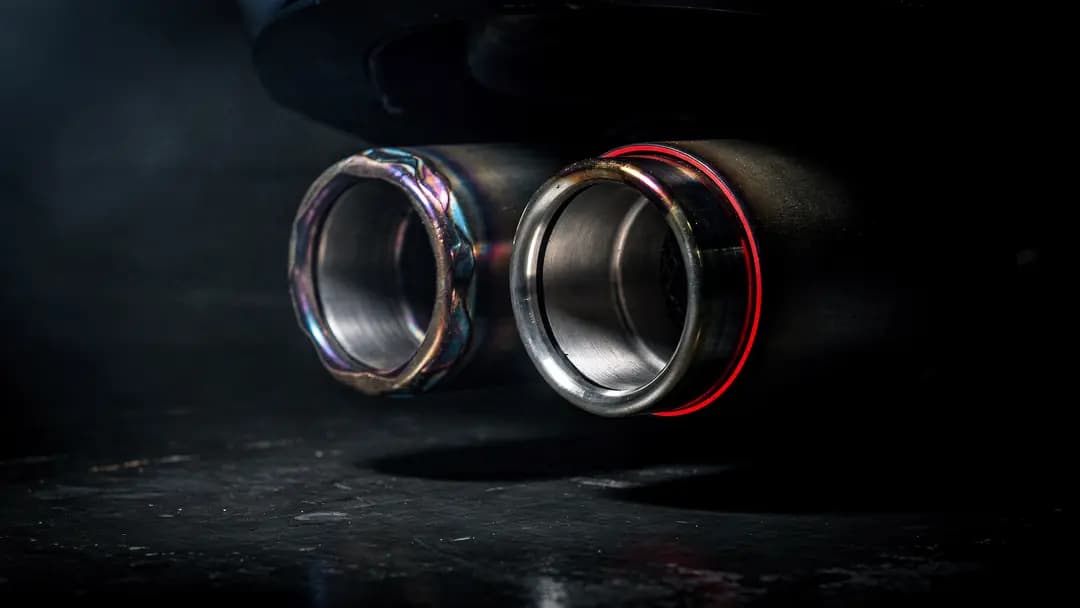
Most people shopping for an aftermarket exhaust end up stuck on the same choice: titanium or stainless steel. Both are proper materials for the job. Where they part ways is weight, sound, the color they take on with heat and, not least, price.
There is no universally better answer, only a better fit for how you use the car. Here is how the two compare.
Weight is the difference you can measure
Titanium's main selling point is weight. Its density is a little over half that of steel, so a system built to the same wall thickness comes out much lighter. Across a full catback the saving is real, not a rounding error.
That mass also sits at the very back of the car. Taking it out is one of the few weight savings you can feel in how the car changes direction, which is why track builds tend to go titanium without much debate.
Heat color and character
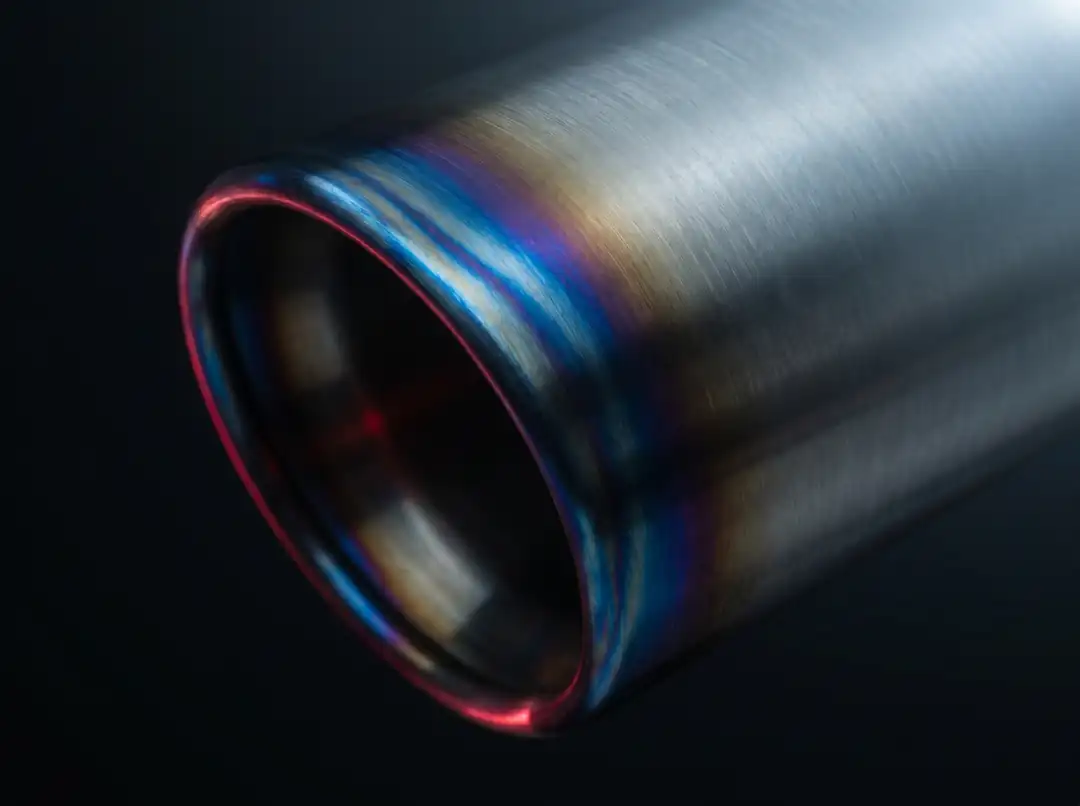
Then there is the patina. Exhaust gas temperature grows a thin oxide layer on the surface of titanium, and the tips shift through blue and purple into gold tones. Nothing is painted on. The color is the metal reacting, and every system ends up slightly different.
Stainless steel stays closer to a clean, polished metallic finish. It can pick up a light straw tint with heat, but it will never color the way titanium does. Some owners want the show; others prefer an exhaust that keeps looking factory.
Sound: how the material changes the note
Material shapes the note as well. Titanium walls are thinner and the metal rings differently, so the tone tends to come across brighter and more metallic. Stainless steel usually sounds fuller and deeper, with more body in the mid-range.
Keep that in proportion, though. Most of what you hear is decided by pipe diameter, the manifold or downpipe, and how the mufflers are built. Still, play the same design in titanium and in steel one after the other and you will hear the difference in timbre.
Durability and corrosion
Made properly, both last. Good stainless resists rust well. Titanium goes a step further: it is close to immune to corrosion, and road salt or standing moisture barely register on it.
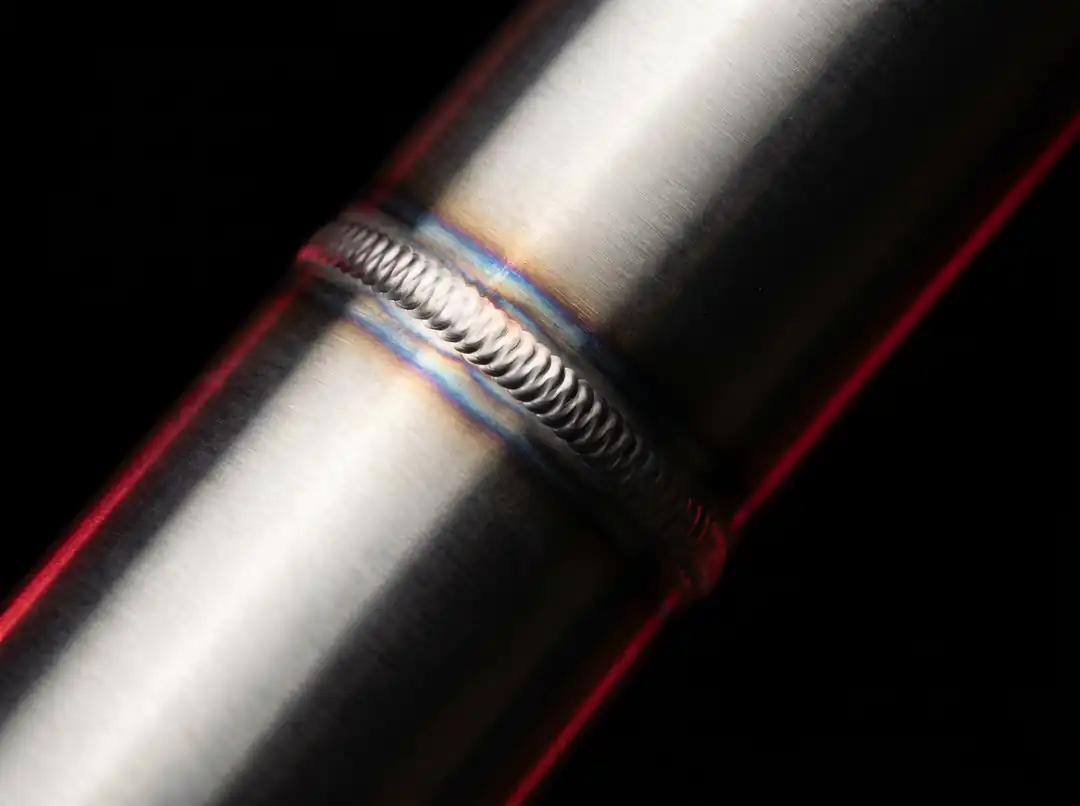
The catch with titanium is fabrication. It oxidizes the moment it gets hot in open air, so welds have to be made under shielding gas with the inside of the tube purged as well, a step known as back-purging. Skip it and the joint goes brittle. That care is a large part of why a finished titanium system costs what it does.
Price and value
Titanium costs more on both counts: the raw tube is dearer and the welding is slower. What you get back is the lowest weight, the patina and that brighter note. Stainless steel is the value option. You get nearly all of the durability, a deep tone and a price that leaves room for a downpipe or an intake in the same budget.
Which one suits your car
Where we would land:
- Titanium if you care about weight, want the heat color and like a sharper, more metallic note. It suits track cars, lightweight builds and show cars where the tips are part of the look.
- Stainless steel if the car is driven every day, you want it to last without fuss, you prefer a deep tone and you would rather spend the difference elsewhere.
- Either way, a well-made system in either material bolts to the factory mounting points and will serve for years.
Titanium and stainless systems at BYC
BYC Performance stocks titanium and stainless steel exhaust systems from specialist manufacturers around the world, in catback and downpipe form. Every system comes with a 24-month BYC warranty and free DDP shipping through our partner couriers, within Türkiye and abroad, with customs and duties covered.
If you are unsure which suits your car, browse the catalog, message us on WhatsApp with your model and engine code, or see fitted examples on Instagram at @bycperformance.