
Cat-Back vs. Downpipe: Which Exhaust Upgrade Comes First
Cat-back and downpipe sit at opposite ends of the exhaust and do different jobs. Here is what each one changes and which we would fit first.
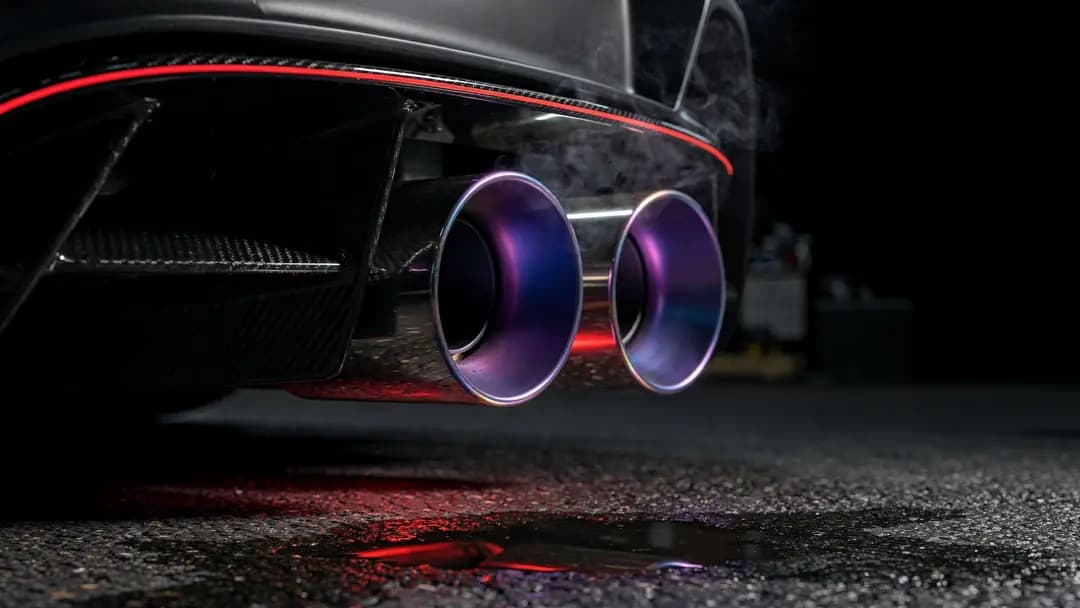
Cat-back and downpipe are the two words that come up in nearly every exhaust conversation. Both are "exhaust", but they sit at opposite ends of the system and do different jobs. Which one you want depends on what you are after: sound or power.
How the exhaust is laid out
On a turbocharged engine the gas leaves in a fixed order: turbo, then downpipe, then the mid-pipe and catalytic converter, then the cat-back with its muffler and tips. The downpipe is the first thing after the turbo. The cat-back is the last section, which is also where the note gets shaped.
Position decides most of it. Closer to the engine, you change how it breathes. Further back, you change how the car sounds and how it looks from behind.
What a cat-back is
A cat-back is everything from the catalytic converter backwards: mid-pipe, resonator, muffler and the tips. Because the converter stays where it is, a cat-back mostly changes sound and weight, plus the rear view. Smoother piping and a freer-flowing muffler give the exhaust a deeper, more present note without changing how the engine runs.
The practical side is why it is usually the first purchase. The cat stays in place. It comes off again if you ever want to go back to stock. In most cases it needs no engine tune. A stainless steel or titanium cat-back changes how a car sounds and looks from the back while leaving the engine side alone.
What a downpipe is
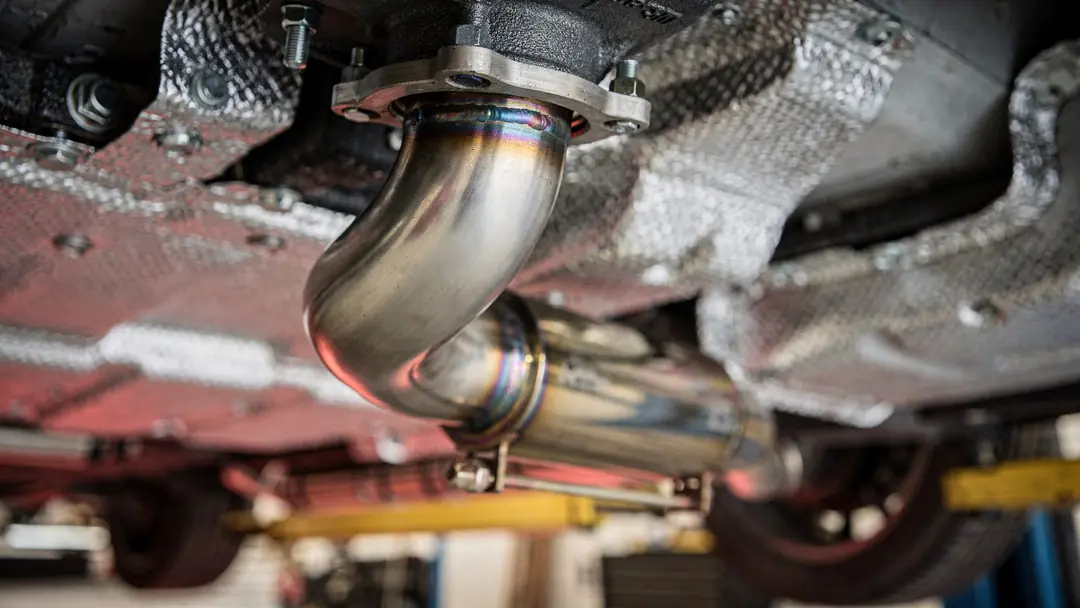
The downpipe is the first pipe after the turbo (or after the exhaust manifold) and it carries gas into the rest of the system. It sits where exhaust pressure is highest. A high-flow downpipe, or a sport-cat downpipe with a less restrictive catalyst, lowers backpressure right there, and on a turbo engine that is where freer flow can turn into more performance.
There is a price for that. A downpipe does its best work with a matching engine tune. It makes the car noticeably louder. And depending on where you live, a high-flow or sport-cat pipe may not pass inspection or emissions rules. The downpipe is a performance part first; the extra volume is a side effect.
Sound or power
That is the whole decision. A cat-back is about character: a fuller note and a cleaner rear end. A downpipe is about flow: letting the turbo breathe more freely and, with the right tune, making use of it. You do not have to pick one over the other, but you should know which of the two you are buying and why.
Which one suits you
- You want a fuller sound and a sharper rear view: start with a cat-back.
- You want the most out of a turbo car: downpipe, usually with a tune, often with a cat-back too.
- You want to keep things reversible and skip the tune: cat-back again.
- You want the complete setup: run both. The downpipe opens up flow and the cat-back handles sound and weight.
- On material: titanium is lighter and tends to have a sharper, more distinctive note. Stainless steel is tough and costs less.
Where to start
If this is your first exhaust part, we would buy the cat-back. The sound changes straight away, nothing else on the car has to, and it still fits if you add a downpipe and a tune later. If the car is already tuned and you are chasing numbers, the downpipe is the one that matters.
BYC Performance imports cat-back and downpipe systems in stainless steel and titanium from specialist manufacturers around the world. Every system comes with a 24-month BYC warranty and ships through partner couriers within Türkiye and abroad.
Browse the systems for your car in the catalog, message us on WhatsApp about fitment and delivery, or follow our builds on Instagram at @bycperformance.