

One of the most-debated questions when choosing a performance exhaust is a simple one: titanium or stainless steel? Both are premium materials — but they diverge in clear ways, from weight and sound character to the heat patina they develop and, of course, price.
The right choice is less about “which is better” and more about how you drive and what you want from the exhaust. Let’s put the two side by side 👇
⚖️ Weight: the most tangible difference
Titanium’s biggest advantage is weight. For a system of the same wall thickness, titanium is noticeably lighter than stainless — its density is roughly half that of steel. That adds up to a real reduction in the total mass of the exhaust system.
Because that weight sits at the rear of the car and close to unsprung mass, shedding it has a positive effect on driving dynamics and overall agility. That’s why weight-focused and track builds so often reach for titanium.
🌈 Heat, colour and character
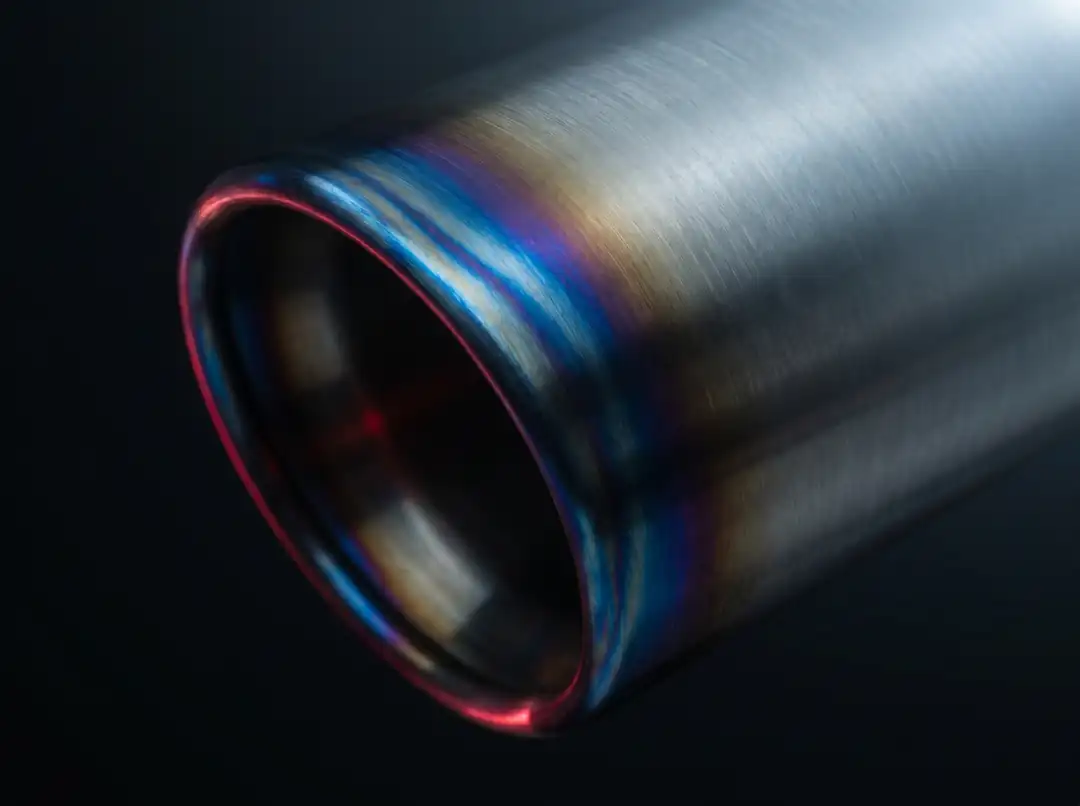
Titanium’s signature is the famous heat patina. The temperature of the exhaust gas forms a thin oxide layer on the surface, and the tips take on iridescent tones that run from blue to violet to gold. It isn’t paint — it’s a look that comes from the nature of the metal itself.
Stainless steel, by contrast, usually offers a clean, mirror-bright, classic metallic finish; it can tint slightly with heat but won’t develop a patina as vivid as titanium’s. One is bold and full of character; the other is timeless and understated.
🔊 Sound: how the tone shifts
Material also shapes the exhaust note. Because titanium is usually made with thinner walls and has a different density, it tends to give a brighter, sharper, more metallic tone. Stainless steel generally delivers a fuller, deeper, “thicker” character.
Of course, most of the sound comes from pipe diameter, manifold design and muffler architecture — the material alone doesn’t decide it. Even so, when the same design is heard in titanium and steel back to back, there’s an audible difference in timbre.
🛡️ Durability and corrosion
Both materials are extremely durable when properly made. Quality stainless steel resists rust strongly; titanium is very nearly immune to corrosion and shrugs off harsh conditions like road salt and moisture.
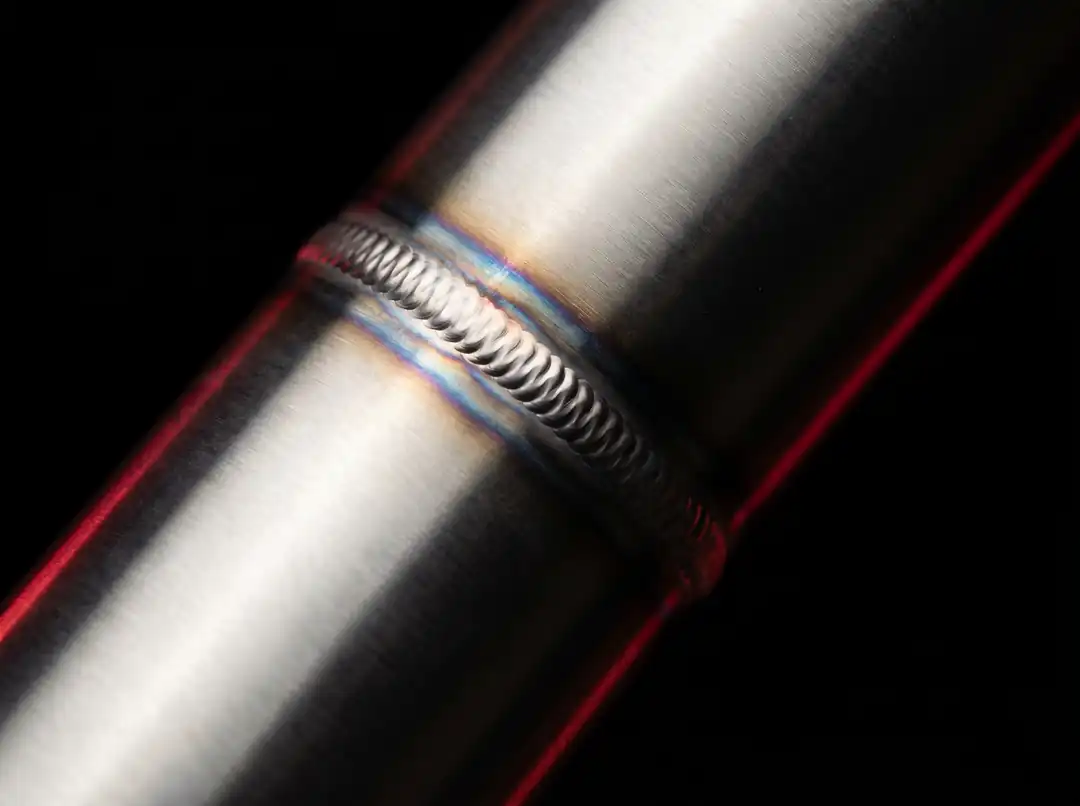
Titanium is harder to fabricate: to keep it from oxidising during welding, it has to be joined under a shielding gas, with the back of the joint purged too (back-purging). That craftsmanship drives both the quality and the price of the finished system.
💰 Price and value
Titanium costs more than stainless steel in both raw material and labour. In return it offers maximum weight savings, that unique patina and its characteristic tone. Stainless steel wins on value — outstanding durability and a deep note at a more accessible price.
🎯 Which one is for you?
A quick summary:
- Titanium: for maximum lightness, heat-born iridescent patina and a sharper, more metallic note — ideal for weight-focused, track or premium show builds.
- Stainless steel: for high durability, a deep and full tone, and excellent value — ideal for daily-driven cars built to last.
- What they share: made right, both fit with OEM-fit precision and serve reliably for years.
🛒 The right exhaust, in the right material
At BYC Performance we build both titanium and stainless-steel exhaust systems to OEM-fit precision — in cat-back and downpipe options, backed by a 12-month manufacturer warranty and free DDP shipping across Türkiye and worldwide (customs and duties are on us).
To choose the right system and material for your car, browse the catalog, message us on WhatsApp for fitment and delivery, or see our builds on Instagram at @bycperformance.